
SEO Is Dead. (Or So the Internet Says.)
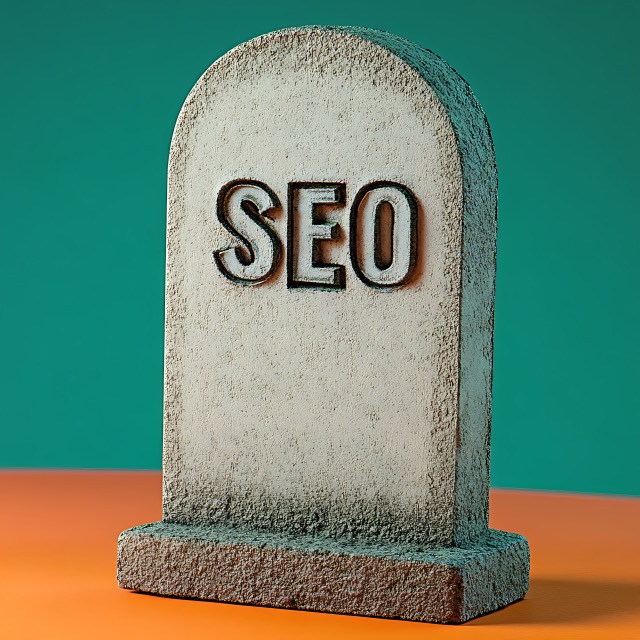


Every few months, the same proclamation makes the rounds online. Someone somewhere declares SEO finished - done, buried, obsolete. It usually shows up as a dramatic LinkedIn post or a YouTube thumbnail with SEO IS DEAD splashed across it in red letters.
(It’s practically cliché at this point.)
Give it a week and the same debate is everywhere: threads, podcasts, newsletters, marketers arguing in comment sections like it’s the sports talk radio of the internet.
But if you take a step back for a second, something becomes obvious pretty quickly.
SEO has not died.
What actually happened is less dramatic and a lot more practical. The way search works has changed, and the strategies that used to dominate the field simply don’t hold the same weight anymore. For people still using the old playbook, that shift can feel like the entire discipline collapsed overnight. In reality, SEO hasn’t disappeared, it’s reincarnated.
SEO Died Years Ago (And Somehow Keeps Dying)
The “SEO is dead” claim tends to surface whenever something new disrupts the search ecosystem. A major Google update rolls out. AI-powered results begin appearing at the top of the page. Organic listings get pushed down a bit further. Suddenly the conversation starts all over again.
We saw it with voice search years ago. We saw it when social media exploded and people thought Facebook would replace search entirely. And now, with AI-generated answers appearing in results, the same prediction has resurfaced with fresh confidence.
The problem is that these predictions usually misunderstand what SEO actually is.
SEO was never meant to be a collection of loopholes in Google’s algorithm. Yet for years that’s exactly how it was treated. Marketers chased keywords, stuffed pages with repetitive phrases, built backlinks from questionable sources, and managed to rank anyway. For a while, the system allowed it.
Then search engines got smart to the tricks.
As Google improved its ability to understand context, user intent, and content quality, many of those shortcuts simply stopped working. Thin pages dropped out of the rankings. Sites built entirely on technical manipulation lost visibility. For companies relying on those tactics, it felt like SEO had suddenly vanished.
In truth, the rules just changed.
Search Has Evolved (And So Has SEO)
Search engines today operate very differently than they did ten or fifteen years ago. Google no longer relies primarily on matching keywords inside a page. Instead, it tries to interpret what a user actually means when they type something into the search bar.
That difference is subtle on the surface but enormous under the hood.
A search like “best running shoes for marathon training,” for example, isn’t just a set of words to match anymore. Google evaluates the intent behind the query, the credibility of the sources providing answers, and whether the content genuinely helps the reader make a decision. Pages that only repeat the keyword rarely perform well anymore. Pages that provide thoughtful, detailed explanations tend to rise.
In other words, search has become much better at recognizing quality.
Because of that shift, modern SEO looks far less like a technical checklist and much more like a long-term content and authority strategy. Technical optimization still matters - site structure, page speed, metadata - but those elements alone won’t carry a site very far without strong, useful content behind them.
The Shift From Keywords to Authority
One of the most noticeable changes in SEO over the past few years is the move away from isolated keyword targeting toward broader topical authority. Instead of publishing dozens of thin pages aimed at slightly different variations of the same phrase, successful websites are building clusters of content that explore entire subjects in depth.
An article might explain a concept. Another piece expands on it. A service page demonstrates practical application. Together, they form a connected ecosystem of information.
Search engines recognize those patterns.
When a site consistently publishes high-quality content around a specific topic, it begins to signal expertise. Over time, that credibility compounds. Pages link naturally to one another, readers stay longer because the information is genuinely helpful, and search engines gradually associate that site with authority on the subject.
This is why a strong SEO strategy today focuses on structure and substance rather than just keywords. Businesses that invest in useful content, clear site organization, and topical depth tend to build far more durable search visibility than those relying on quick wins.
Think of it less like trying to rank a single page and more like building a well-organized library.
Helpful Content Is Winning
If there’s one trend that keeps appearing across modern search results, it’s the rise of genuinely helpful content. Pages that clearly answer questions, explain complicated topics, or provide practical insight tend to outperform generic, formulaic articles.
Part of this comes down to how people search today. Queries are longer, more conversational, and often more specific. Instead of typing “marketing strategy,” someone might search “how small businesses build marketing systems that actually generate leads.” Those types of searches require deeper answers.
The best-performing content meets that expectation. It offers context. It anticipates follow-up questions. It doesn’t feel rushed or assembled purely for the sake of ranking.
Ironically, this shift brings SEO closer to traditional publishing than many people realize. The same principles that make a great magazine article or educational resource - clarity, depth, credibility - now play a major role in search visibility.
Search engines have simply gotten better at recognizing them.
Smart SEO Matters More Than Ever
Despite the constant predictions of its demise, search traffic hasn’t gone anywhere. If anything, the role of search in everyday decision-making continues to expand. People use it to research products, compare services, learn new skills, and solve problems both big and small.
Businesses still want to appear in those moments.
That fundamental dynamic hasn’t changed since the early days of the internet. What has changed is the path to earning that visibility. Instead of relying on technical tricks or keyword density formulas, successful SEO strategies now revolve around credibility, consistency, and useful information.
It’s slower than the shortcut-heavy tactics of the past, but it’s also far more sustainable.
Sites that focus on building genuine authority tend to maintain their rankings through algorithm updates. Their content continues attracting visitors long after it’s published. And over time, the compounding effect of that visibility becomes difficult for competitors to replicate.
The Real Future of SEO
So no, SEO isn’t dead.
The internet may enjoy saying it every few months, but the evidence doesn’t support the claim. What we’re seeing instead is the natural evolution of a discipline that has grown alongside the web itself.
Search engines are becoming better at understanding information. Users are asking more thoughtful questions. Businesses are realizing that sustainable visibility requires more than quick tricks.
In many ways, SEO today resembles reputation building. Companies publish useful content, organize their information clearly, and demonstrate expertise in their field. Over time, search engines begin to recognize that pattern.
Authority grows & visibility follows.
Meanwhile, somewhere online, another article will inevitably appear declaring the end of SEO once again. It’s almost part of the tradition now.
Which, ironically, is still a pretty good SEO strategy.